 Robert Russell Designs
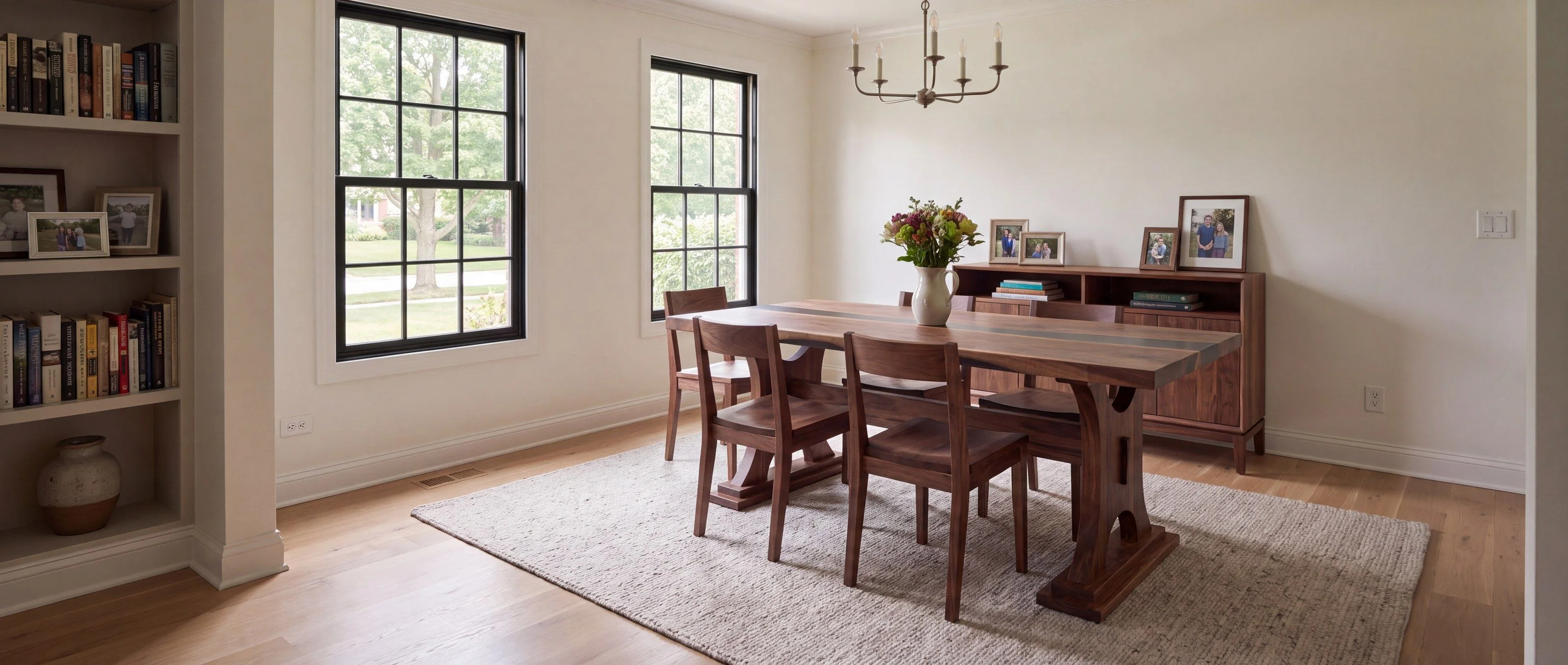
Shown in a rendered room
Sculptural wooden table bases.
The top shouldn't be the only thing that gets attention. I draw the base and the top together, and build the base in wood with traditional joinery.
Why the base matters
Most tables get a base picked after the top. I draw them together, because the base sets the proportions of the whole table, decides where people’s knees go, and is often the first thing you see from across the room.
How it’s built
The bases on this page are wood: arched trestles, crossed legs, splayed legs and pedestals. I build them with traditional joinery, including mortise and tenon construction, and shape and fit each part.
The details are where the time goes: the curve of a cut-out, how a leg meets a rail, the grain chosen and oriented for each part. They are the reason bases like these cost what they do.
Drawn with the top
Every base is drawn with its top. A SketchUp model shows the shape, proportions and details of the whole table, along with AI-assisted visualizations to help you see it in a finished space, before I cut a board.
Drawn, then built
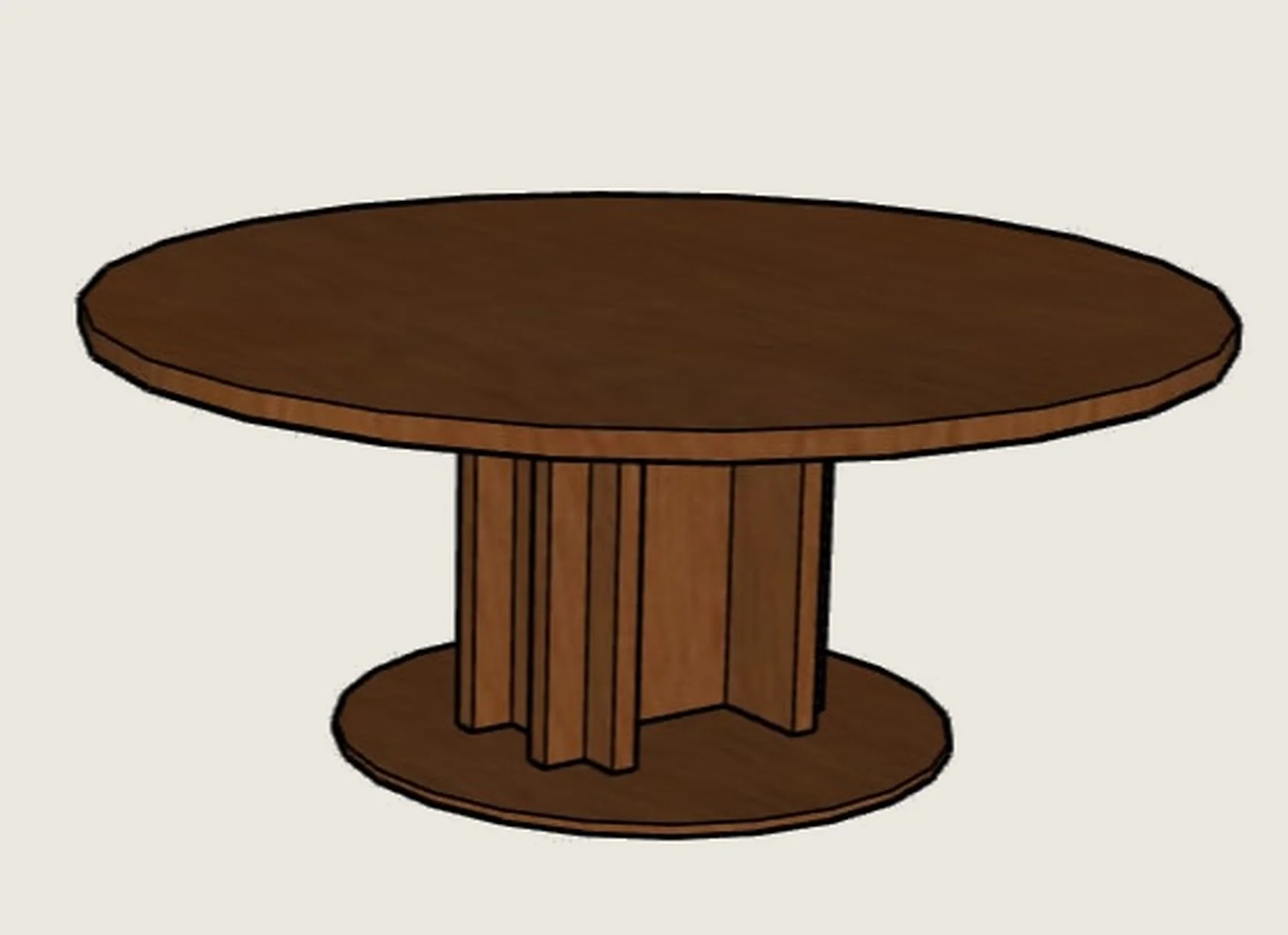
01DrawnThe model, in SketchUp
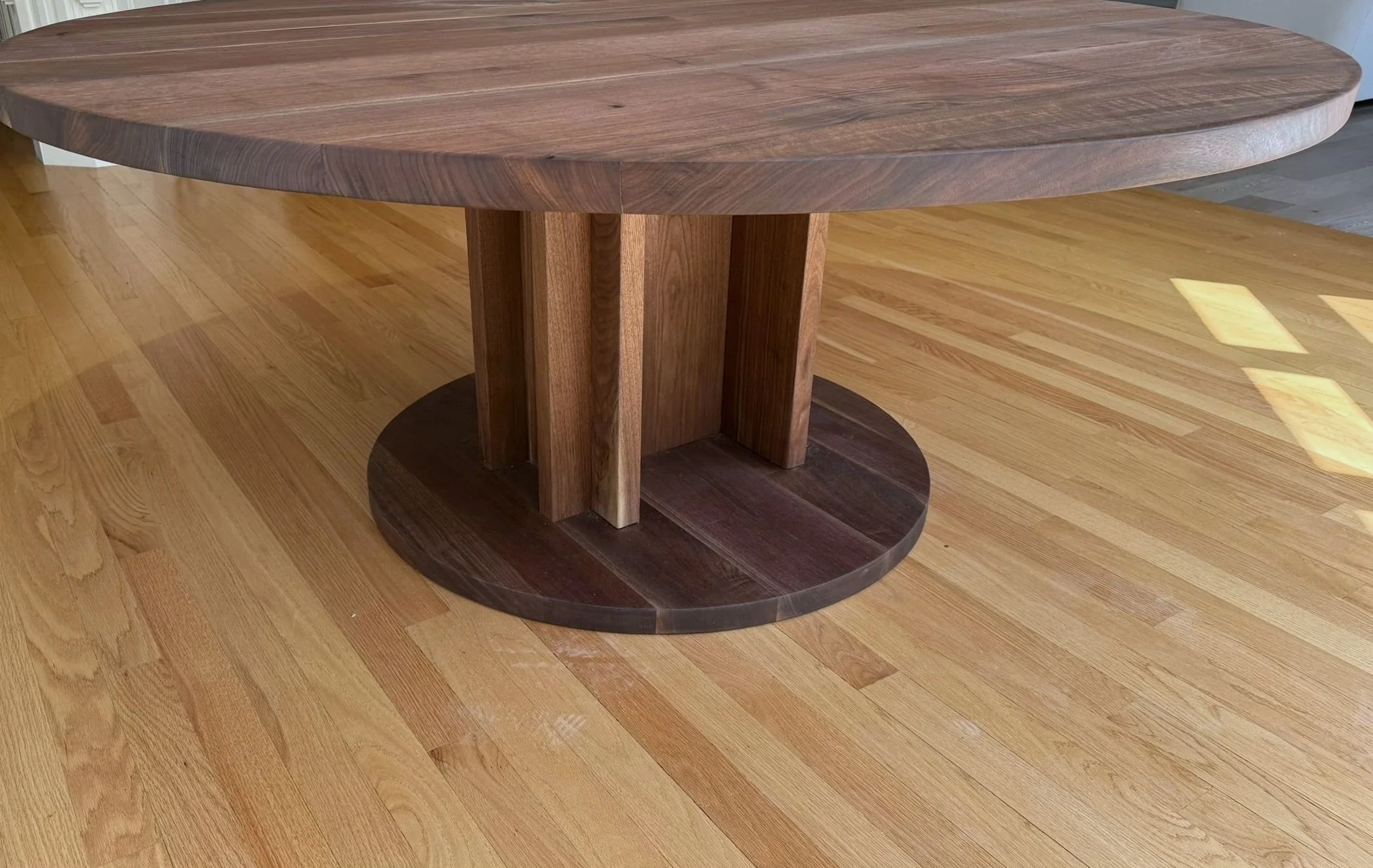
02BuiltThe finished table, installed
Sculptural wooden table bases, photographed
4 photographs
-
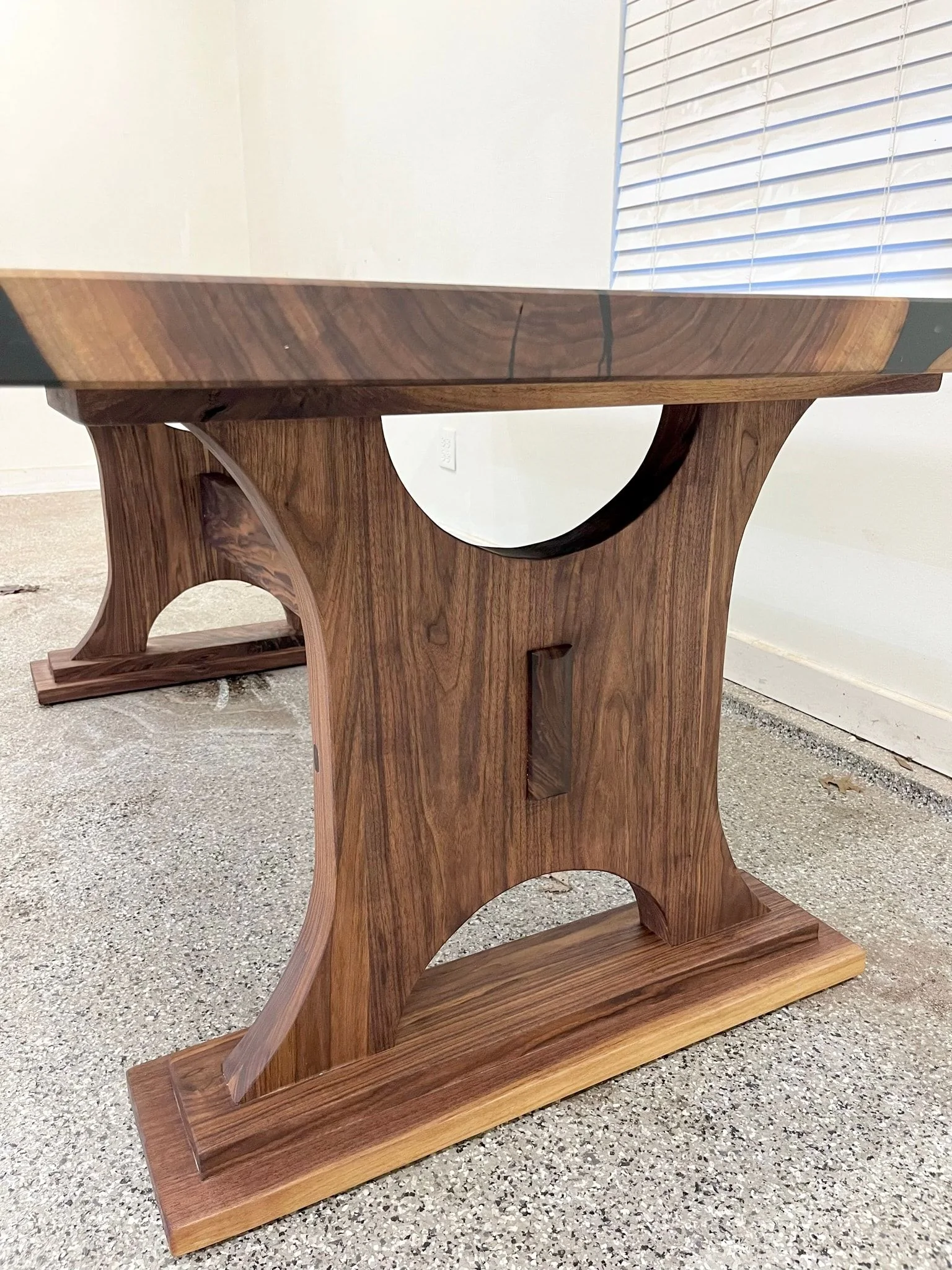
The same trestle from the end. -
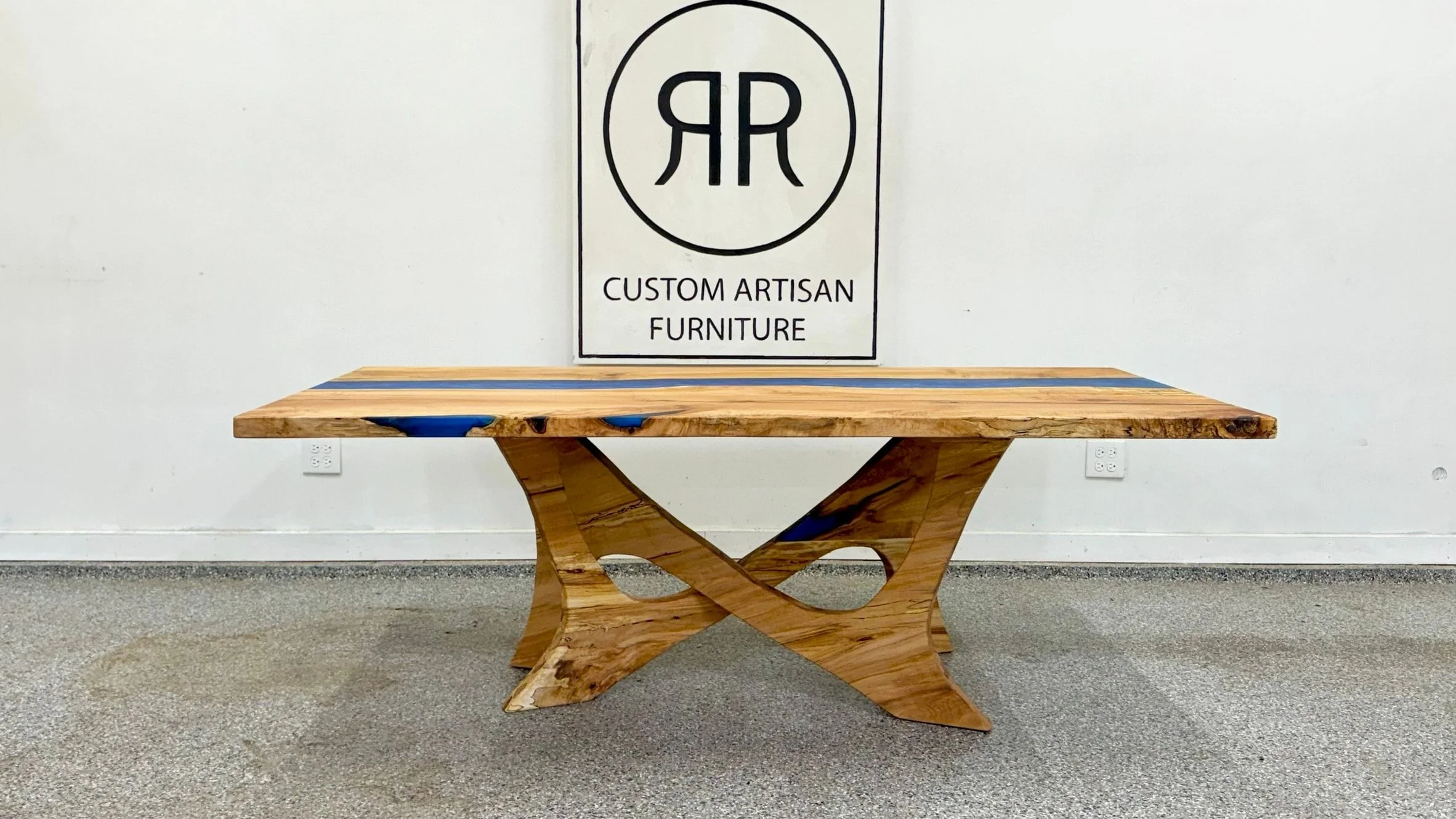
Two shaped legs crossing beneath the top. -
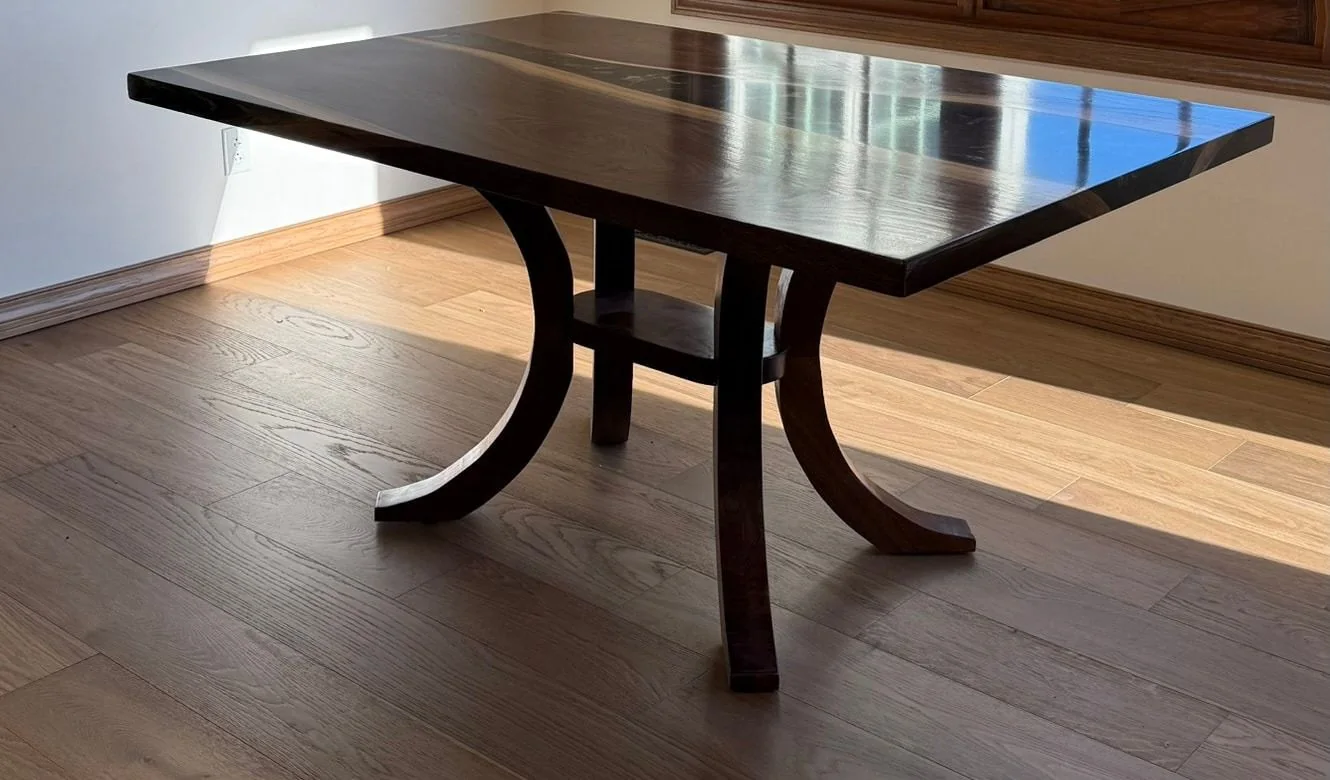
Four curved legs around a central shelf, in a client's home. -
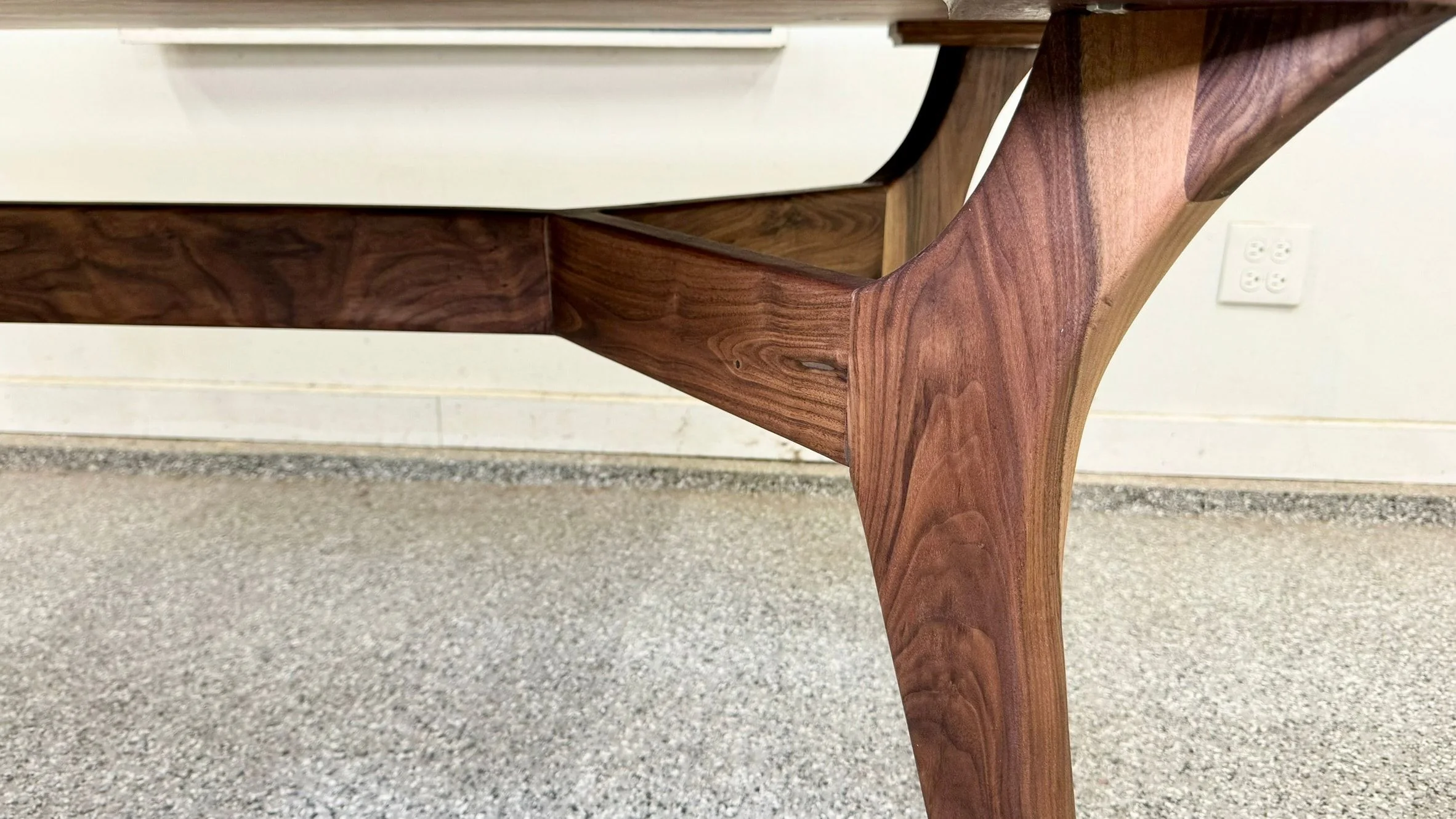
Where a splayed walnut leg meets the rail.
Before you ask
- Can the base be designed before the top?
- Yes. I draw the base and the top together, and either one can lead the design.
- Do you make steel bases too?
- Yes. Some designs call for steel, and those tables are in the metal-based collection. This page is the wooden work.
- How long does a commission take?
- 6 to 12 weeks from design approval. The joinery, the curing and the finishing set the pace, and there are parts of fine furniture making that simply cannot be rushed without affecting the result. Expedited timelines may be available for select projects based on production capacity.
- What does a commission cost?
- Most commissions fall in the $6,000 to $20,000 range, and some fall outside it. Tell me the size, the wood and the budget you have in mind, and I can usually give you a rough price on the first call.