 Robert Russell Designs
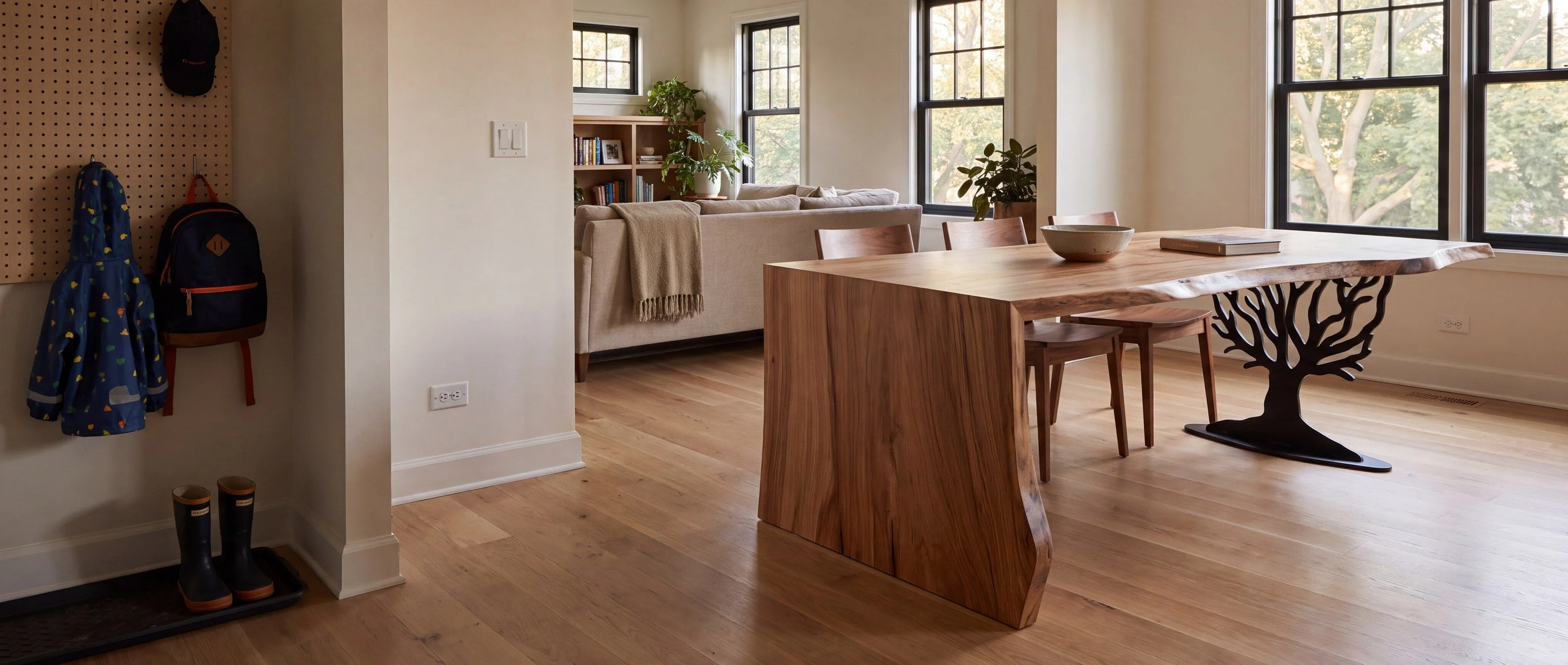
Shown in a rendered room
Live Edge Tables: Styles, Costs and Custom Design
Live edge tables end to end: how a slab is chosen, how the edge is worked, what the finishes do, and what to settle before ordering one.
Buying a Custom Table ·
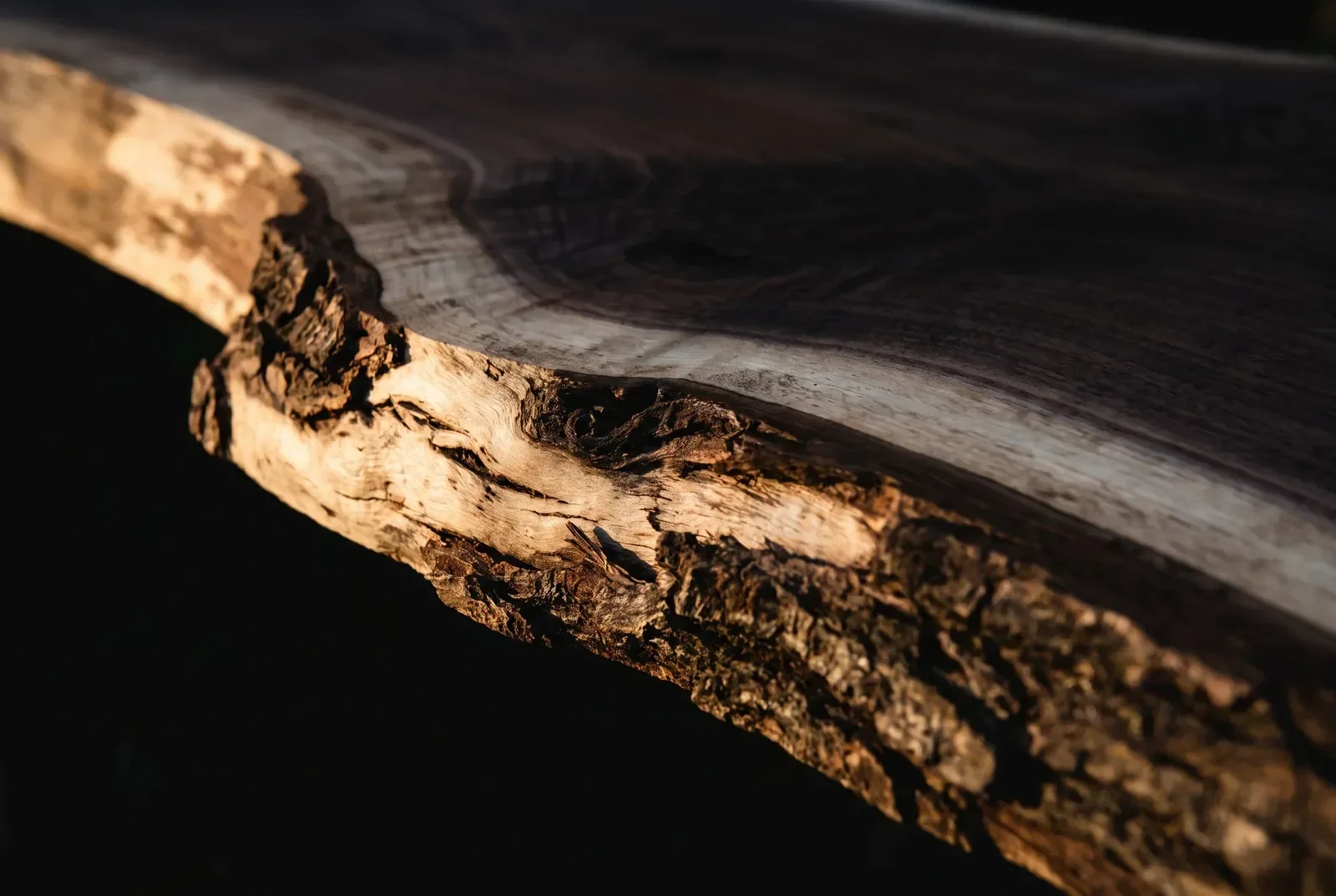
A live edge table keeps the shape of the tree it came from. Live edge is one of the ways I work, alongside straight-edge solid hardwood, resin and steel, and this guide covers how the slab is chosen, how the edge is worked, what the finishes do, what one costs, how to size it, and how to look after one.
What Is a Live Edge Table?
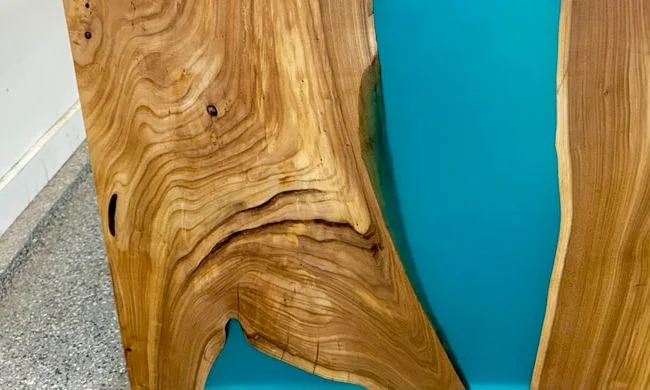
A live edge table is a table whose top keeps the natural outer edge of the tree it was cut from, instead of being sawn straight. The curves, knots and grain along that edge stay in the finished piece, so no two tables are alike. I flatten and finish the face of the slab and keep the edge’s shape.
Choosing the Right Wood Slab
Selecting the perfect wood slab is crucial. Popular choices include:
-
Walnut: Known for its rich color and grain patterns.
-
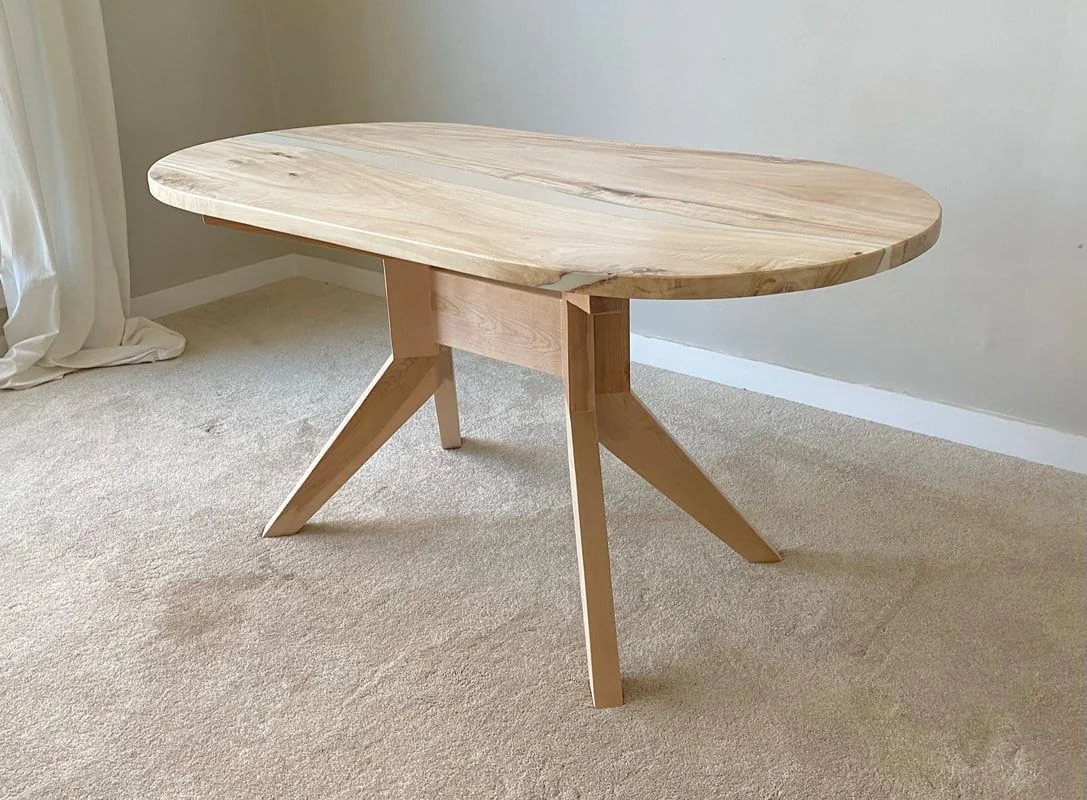
Maple: Offers a lighter tone with subtle grain.
-
Elm: Features unique knots and a golden brown hue.
Each wood type brings its own aesthetic and durability to the table.
The Role of Epoxy Resin
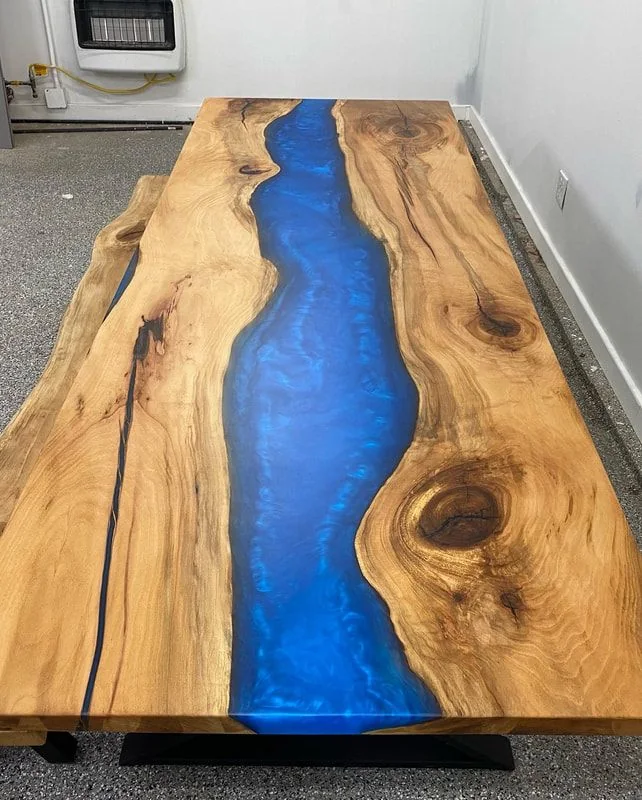
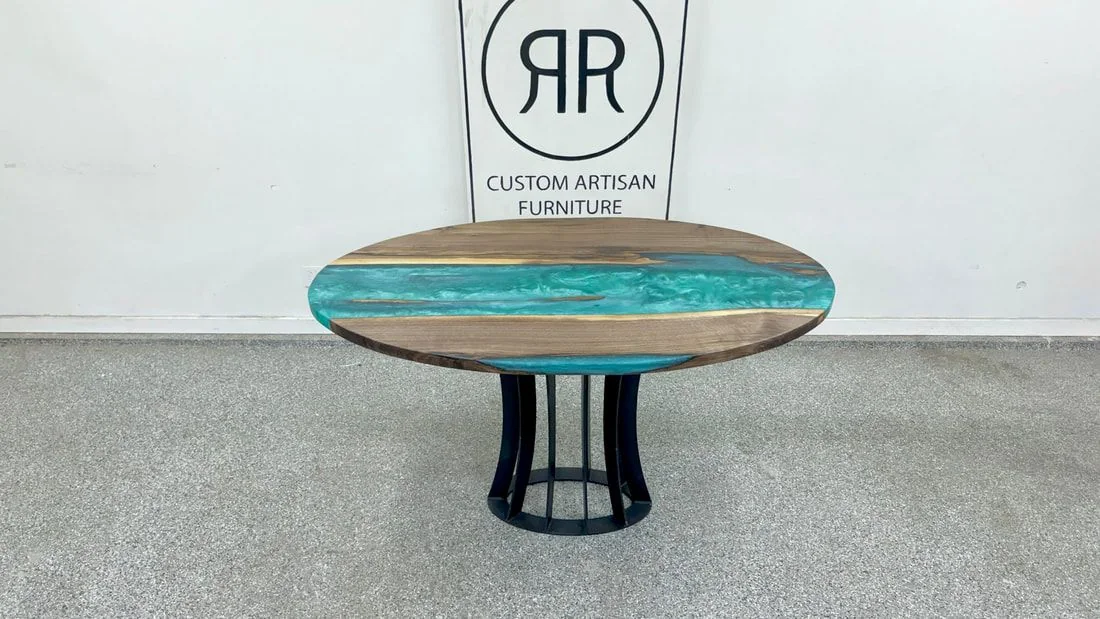
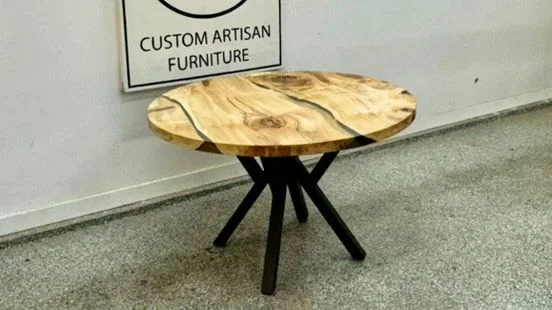
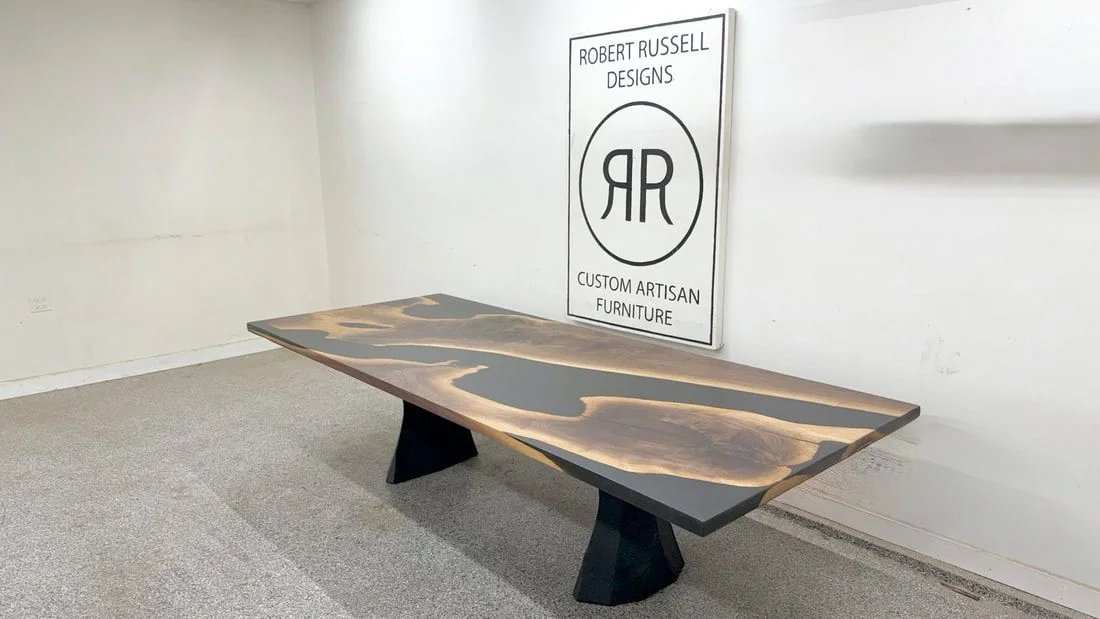
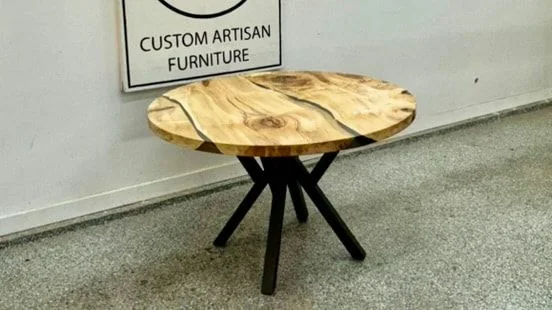
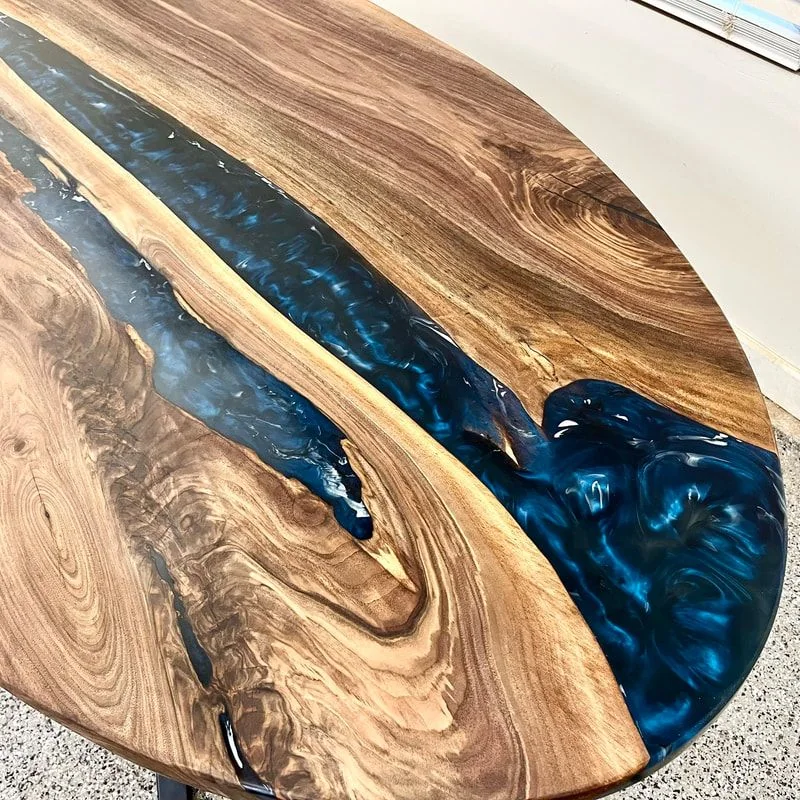
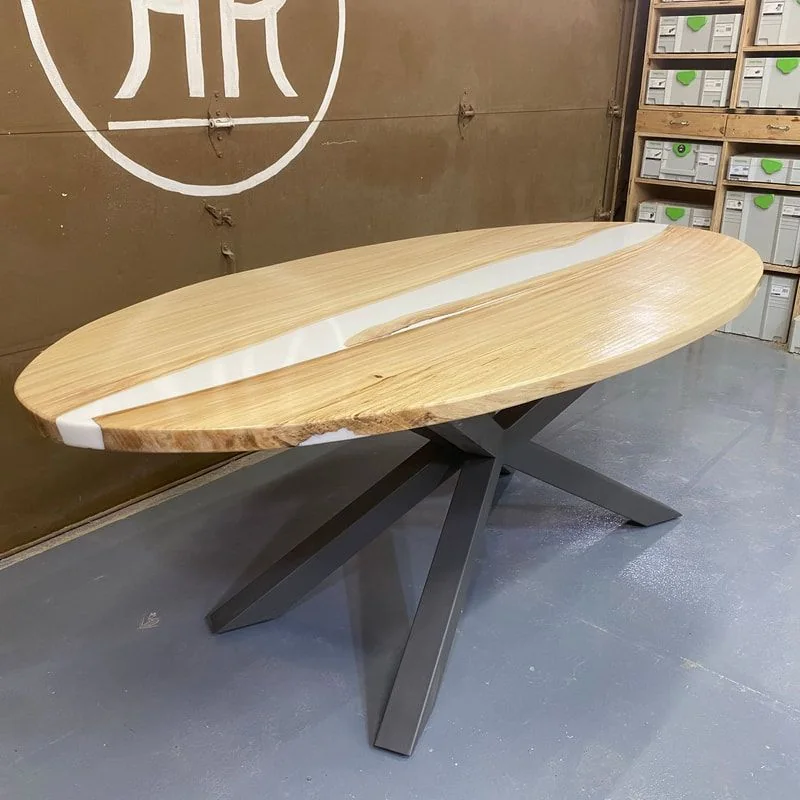
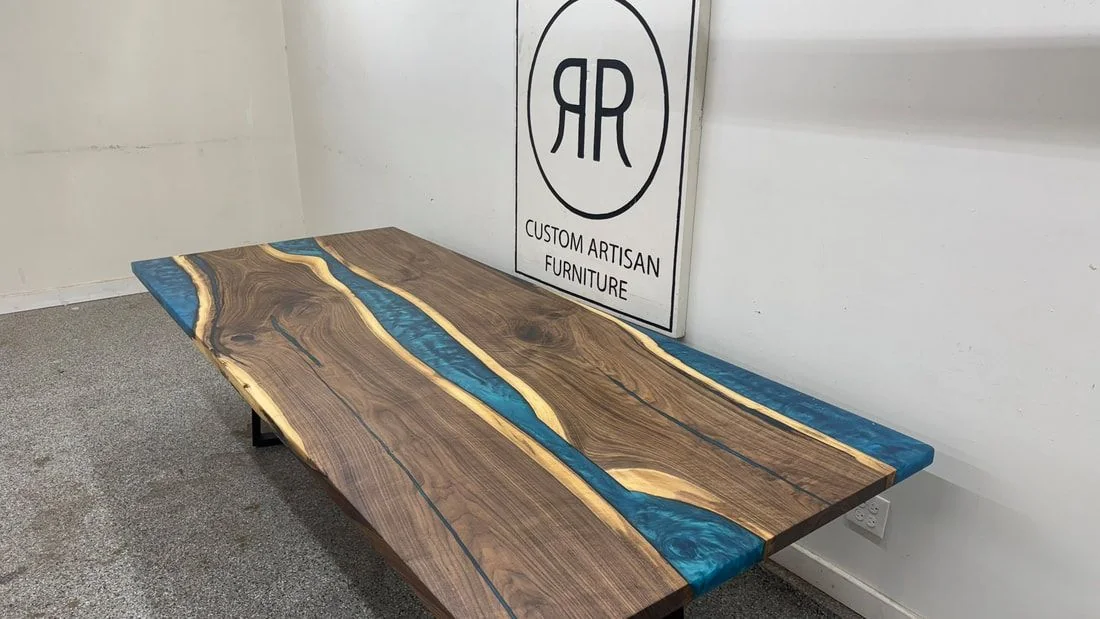
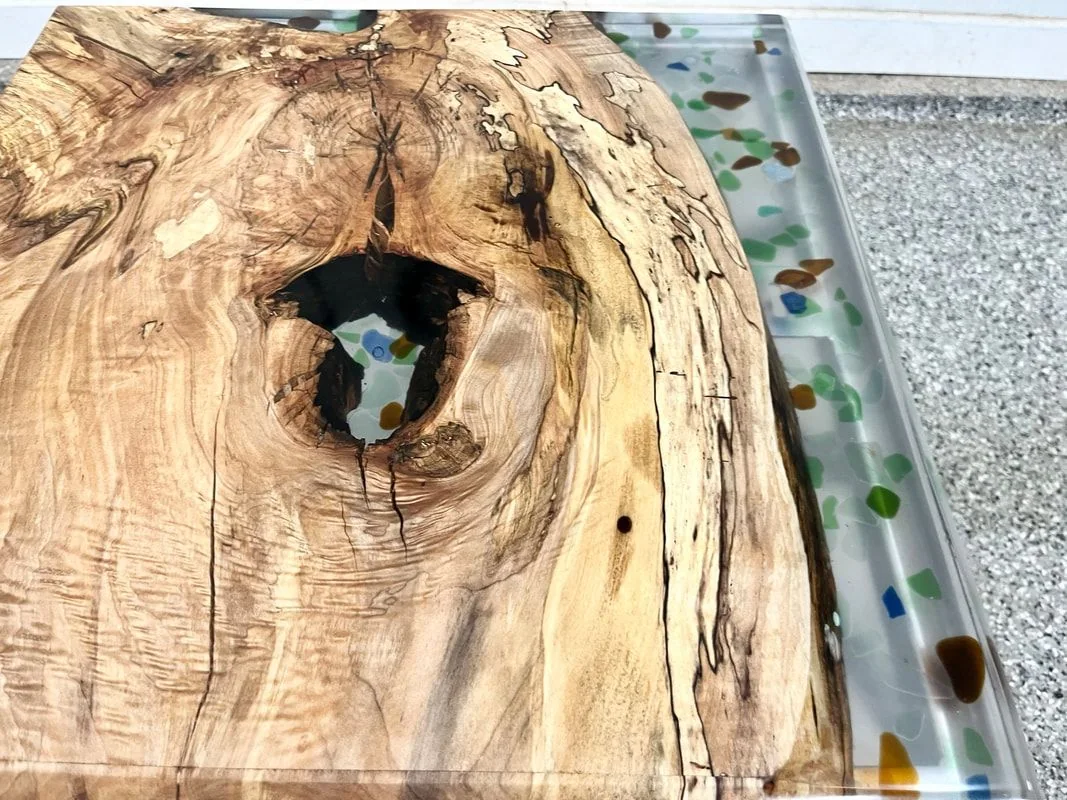
Epoxy resin is often used to fill natural voids, cracks, or to create vibrant river-like effects. It not only enhances the table’s appearance but also adds strength and stability. Techniques range from clear pours to colored and even glowing resins, allowing for endless creative possibilities.
Crafting the Perfect Live Edge Table
Creating a live edge table involves several meticulous steps:
-
Selecting and Preparing the Slab: Choose a slab that fits your desired dimensions and aesthetic. Ensure it’s properly dried to prevent future warping.
-
Sanding and Shaping: Smooth the surface while preserving the natural edge. This step requires patience to achieve a flawless finish.
-
Applying Epoxy Resin: Mix and pour the resin into voids or along edges, ensuring even distribution and curing.
-
Finishing Touches: Sand between coats, apply a protective finish, and attach the base securely.
For a visual walkthrough, consider this detailed guide: How to Make a Walnut Epoxy Resin Table
Design Inspirations
Live edge tables can complement various interior styles:
-
Rustic: Embrace the natural imperfections of the wood for a cozy, cabin-like feel.
-
Modern: Pair with sleek metal bases for a contemporary look.
-
Industrial: Combine reclaimed wood with raw steel elements.
Explore more design ideas and inspiration from industry leaders like Fine Woodworking and Carved
For live edge tables I have built, see my live edge waterfall dining tables and the walnut collection.
What a Live Edge Table Costs
Most of my commissions land between $6,000 and $20,000, and some fall outside that. Where a table sits in the range depends on the slab, the size, whether there is resin, the base and the finish. You get a drawing and a price range before anything is cut, and the build takes 6 to 12 weeks from design approval.
Sizing a Live Edge Table
I allow 24 inches of table edge per person and 36 inches of clearance behind each chair so people can pull out and pass. A live edge runs in and out along its length, so the usable edge is shorter than the overall length, and I size the slab to the seating count, not only to the room. As a guide, a 120 inch table typically seats ten and a 144 inch table seats twelve (sizing a 10 to 12 foot dining table). A slab top starts to read as a slab at 2 to 2.5 inches thick (how thick a dining table top should be).
Maintenance and Care
To preserve the beauty of your live edge table:
-
Regular Cleaning: Dust with a microfiber cloth to avoid scratches.
-
Avoid Moisture: Use coasters and placemats to protect the surface.
-
Periodic Oiling: Apply food-safe oils to nourish the wood and maintain its luster.
For comprehensive care tips, refer to my finish-by-finish guide: How to Care for Your Live Edge and Epoxy Table.
Ready to Create Your Custom Live Edge Table?
Every table I build is drawn first, from the actual slab, to your room. Begin a commission and we start there.